
Hormones and Intimacy: The Conversation You're Not Having (And Why It's Costing You More Than You Think)
Jun 01, 2026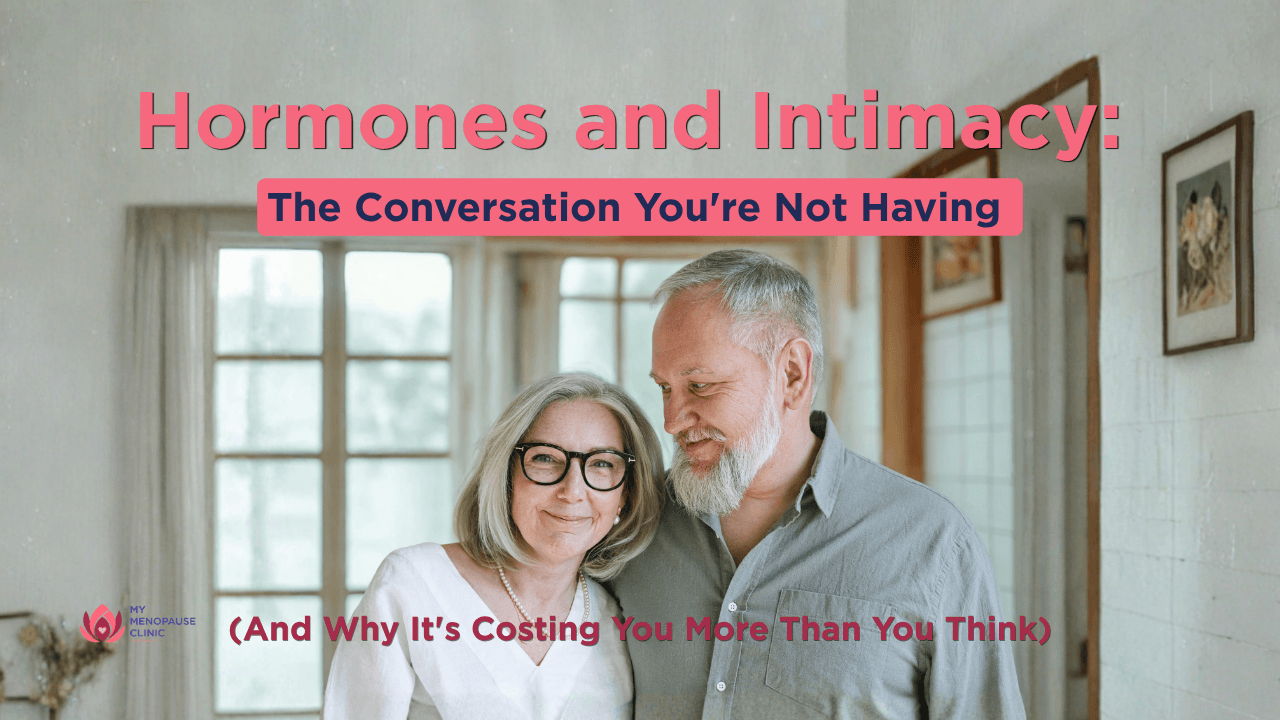
When hormones and intimacy are both changing, communication can become more difficult. Here's why talking with your clinician may help support both your relationship and your overall wellbeing.
Here’s How it Starts
Many women notice changes in intimacy during perimenopause and menopause, but it's not always easy to talk about.
You may find yourself feeling less interested in sex, experiencing discomfort during intimacy, or noticing a growing sense of distance between you and your partner. Often, both people are aware that something has changed, but neither knows quite how to start the conversation.
These changes can be confusing and, at times, isolating. Some women worry that something is wrong with their relationship, while others blame themselves for no longer feeling the way they once did.
What many couples don't realise is that hormonal changes can have a significant impact on libido, vaginal health, energy levels, mood and emotional connection. When these changes go unrecognised or unaddressed, communication can become more difficult and feelings of disconnection may grow over time.
Understanding what's happening and seeking support early can help couples navigate these changes together and maintain connection through this stage of life.
The Real Cost Isn't Physical
When desire changes or intimacy becomes uncomfortable, the first concern is often physical.
Many women find themselves wondering:
- Why has this changed?
- Why does intimacy feel different than it used to?
- Is this a normal part of perimenopause or menopause?
These questions are important, but the impact of hormonal changes often extends beyond physical symptoms alone.
When intimacy changes and couples don't understand why, it can become more difficult to communicate openly about what they're experiencing. Misunderstandings may develop, assumptions can be made, and feelings of frustration, confusion or disconnection may begin to grow.
This is why recognising the role hormones can play in intimacy is so important. Understanding what's happening can help couples approach these changes with greater clarity, compassion and support.
Your partner withdraws from intimacy.
It's easy to assume that changes in intimacy are a reflection of the relationship itself.
Many people worry:
- They're no longer attracted to me.
- I've done something wrong.
- Our relationship has changed.
In reality, hormonal changes can play a significant role in desire, arousal and intimacy. For some people, symptoms such as fatigue, sleep disruption, vaginal discomfort or changes in libido may contribute to a reduced interest in sex.
Understanding the factors involved can help couples approach these changes with greater compassion and reduce the likelihood of misunderstanding or self-blame.
You stop initiating.
They may assume: "They're no longer interested in me."
You may assume: "Something has changed in our relationship."
In reality, hormonal changes, fatigue, disrupted sleep, reduced confidence, discomfort during intimacy and the emotional impact of perimenopause or menopause can all influence desire and connection.
When couples don't understand what's contributing to these changes, it's easy for misunderstandings and assumptions to develop.
The gap between what's actually happening and what each person believes is happening can make communication more difficult and leave both partners feeling confused, frustrated or disconnected.
Understanding the role hormones may be playing is often an important first step towards having more open conversations and finding the right support.
Why The Silence Gets Louder
Many people avoid talking about changes in intimacy because they assume the issue is simply about sex.
In reality, intimacy is influenced by a wide range of physical, emotional and hormonal factors.
During perimenopause and menopause, changes in hormone levels can affect desire, arousal, vaginal comfort, sleep quality, mood, energy levels and overall wellbeing. Chronic stress, poor sleep and other life demands can also play a role.
When these changes occur, intimacy may begin to feel different. Some people experience a reduced interest in sex, while others notice discomfort, lower confidence or a sense of disconnection from their partner.
Without an understanding of what may be contributing to these changes, it's easy for misunderstandings to develop. One partner may interpret reduced intimacy as a loss of attraction, while the other struggles to explain symptoms they may not fully understand themselves.
Recognising the role that hormones, stress and overall health can play is often an important first step towards having open conversations and finding the right support.
What Happens When You Finally Name It
One of the most important things we see in clinical practice is the sense of relief that often comes when people finally talk about changes in intimacy.
Many couples spend months, or even years, trying to make sense of what has changed. Without a clear explanation, it's easy for assumptions to develop. One partner may worry that attraction has been lost, while the other may be struggling with symptoms they don't fully understand themselves.
In reality, changes in intimacy can be influenced by a range of factors, including hormonal changes, fatigue, disrupted sleep, stress, vaginal discomfort and reduced libido.
When these factors are identified and addressed, couples often find it easier to have open conversations about what they're experiencing. Understanding the underlying contributors can help reduce self-blame, improve communication and create a pathway towards appropriate support and treatment.
While the conversation itself may not solve the problem immediately, it is often the first step towards understanding what's happening and moving forward together.
The Conversation Starts With Your Clinician, Not Your Partner
Many people find it difficult to talk about changes in intimacy, particularly when they're not sure what's causing them.
For some, the first step isn't necessarily having all the answers with their partner. It's understanding what may be happening within their own body.
A conversation with a clinician can help provide clarity around the physical, hormonal and emotional factors that may be contributing to changes in desire, arousal, comfort or connection.
For example, you may notice that:
- Your interest in intimacy has changed
- Intimacy feels uncomfortable or painful
- Your mood, confidence or energy levels are different
- You no longer feel quite like yourself
What many people don't realise is that a range of factors may contribute to these changes, including hormonal shifts, stress, sleep disruption, thyroid function, medications, physical health concerns and life circumstances.
Understanding these factors can make it easier to communicate with your partner about what you're experiencing.
Instead of feeling uncertain about why things have changed, you may be able to say:
- "My hormone levels have changed, and that's affecting how I'm feeling."
- "I've learned that some of the symptoms I've been experiencing are common during perimenopause and menopause."
- "My clinician has identified some factors that may be contributing, and we're working on a plan to address them."
When couples have a better understanding of what's happening, conversations often become less about blame or self-doubt and more about finding solutions together.
For many people, gaining clarity is the first step towards improving both their wellbeing and their connection with their partner.
What You're Really Asking When You Avoid The Conversation
Many people delay talking to a clinician about changes in desire, intimacy or physical comfort because these conversations can feel personal, vulnerable or difficult to start.
It's common to hope that symptoms will improve on their own or to assume that what's happening is simply something that needs to be accepted.
However, delaying the conversation can sometimes lead to ongoing uncertainty, frustration or misunderstandings, both for the individual experiencing the symptoms and for their partner.
Seeking support doesn't mean something is wrong with your relationship. In many cases, it simply provides an opportunity to better understand the physical, hormonal and emotional factors that may be contributing to the changes you're experiencing.
The earlier these conversations happen, the sooner people can access information, support and treatment options that may help improve both their wellbeing and their relationships.
Often, the first step is simply starting the conversation.
Your Next Step: Addressing Hormones and Intimacy
If you've been avoiding this conversation with your clinician, your partner, or even yourself, you're not alone.
Many people find it difficult to talk about changes in desire, intimacy or physical comfort, particularly when they're unsure what's causing them.
The good news is that these symptoms are often linked to identifiable physical, hormonal and lifestyle factors. Understanding what may be contributing is an important first step towards finding the right support and treatment options.
For many people, greater clarity can make it easier to communicate with their partner, make informed decisions about their health and feel more confident about the path forward.
You are not broken, and these changes do not mean there is something wrong with your relationship. Hormonal transitions such as perimenopause and menopause can have a significant impact on intimacy and wellbeing, but support is available, and there are often effective ways to address the symptoms you're experiencing.
Book a consultation with our team to explore what's happening and discuss the treatment options that may be right for you.